

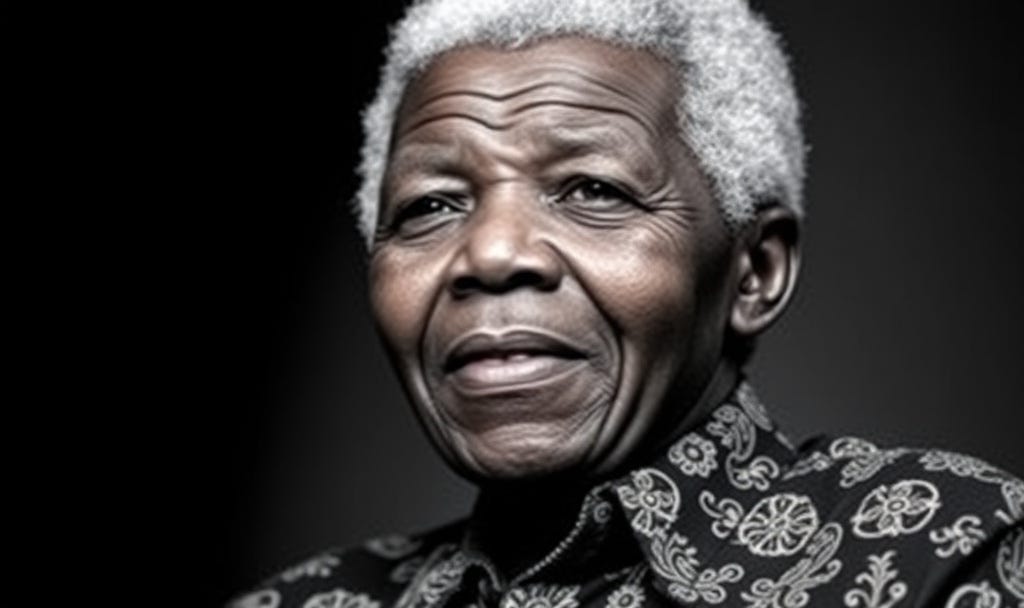
After reading Nelson Mandela’s autobiography, Long Walk to Freedom, I found myself returning to one question:
How could anyone go through so much and still emerge with his humanity intact?
Mandela was persecuted, separated from his family, treated as less than human, and imprisoned for 27 years because he opposed South Africa’s apartheid system. Those years were designed to break his body, silence his voice, and convince him that resistance was hopeless.
Yet when he finally walked out of prison in 1990, he did not appear consumed by revenge. That does not mean he had forgotten what happened. It does not mean he accepted injustice or excused the people responsible for it. Mandela remained a determined political leader who understood power, conflict, negotiation, and sacrifice.
But he also understood something many of us never learn: hatred can imprison the person carrying it. The same is true for resentment and other lower emotions.
Mandela was born in 1918 in the village of Mvezo, South Africa. As a young man, he studied law, became politically active, and joined the struggle against apartheid, the government system that enforced racial separation and denied basic rights to South Africa’s Black majority.
His resistance eventually led to his arrest and conviction. He spent most of his imprisonment on Robben Island, where inmates endured hard labor, poor food, limited contact with loved ones, and deliberate humiliation.
Imagine losing nearly three decades of your life. Imagine watching your children grow up from a distance. Imagine being unable to comfort your family through illness, death, fear, and uncertainty. Imagine waking every morning knowing that the people holding the keys wanted you to surrender not only your freedom, but your dignity.
Many people would have left prison determined to punish everyone responsible.
Mandela left prepared to help build a country.
He became South Africa’s first Black president in 1994 and served until 1999. Rather than using the presidency to settle personal scores, he worked toward democracy and reconciliation in a nation that could easily have collapsed into greater violence.
This is where I find the deeper connection to gratitude.
Gratitude is often presented as appreciation for pleasant things. We are told to be thankful for a beautiful sunset, a comfortable home, a healthy meal, or time with family. These things matter.
But Mandela’s life points toward a more demanding form of gratitude. It is gratitude for the opportunity to keep serving after life has wounded us. It is gratitude for the freedom to choose our response, even when we could not choose what happened. It is gratitude that does not deny suffering, but refuses to let suffering have the final word.
Gratitude in action.
Mandela did not become great because terrible things happened to him. Millions of people experience terrible things and are never given recognition, justice, or a public platform.
He became great because he decided what those experiences would make of him. He took the high road, one of virtue, one I deeply admire. He could not recover the years taken from him. He could not undo the pain suffered by his family or erase the cruelty of apartheid. What he could do was use whatever life remained to help create something better.
That may be one of the most important lessons of aging. As the years pass, each of us accumulates reasons to become bitter. People disappoint us. Dreams collapse. Bodies weaken. Loved ones die. Opportunities disappear. Some wounds never completely heal.
We cannot always choose what we lose. We can choose what we become.
Nelson Mandela died in 2013 at the age of 95. His life does not offer us a sentimental story about remaining positive. It offers something more honest and useful: evidence that a person can experience enormous injustice without allowing injustice to become his identity.
That is why his story belongs in Aging with Gratitude. Gratitude is not pretending the past was better than it was. It is deciding that the pain of the past will not be permitted to destroy the possibilities of the future.
Mandela’s long walk was not only a walk toward political freedom. It was a walk toward freedom from bitterness. And after everything he endured, that may have been his greatest victory.
Thanks for leaving a comment and restacking this article if it helped you.
Beautifully said, thank you Cliff. I got to tour the cell where Mr Mandela was wrongly imprisoned and it was so inhumane. I love his amazing example of goodness and love inspite of those injustices. So I need to now read his book too. Thank you for this inspiring message!!
Reading this reminded me that the strongest people aren’t those who escape hardship, but those who refuse to let hardship have the final say.
Thank you for sharing such a thoughtful reflection on Mandela’s remarkable legacy.