

I’d love to know the future, but I do my best to live in the now. It’s better that way.
Tripping into the future and regretting the past are terrible ways to live. I’ve spent enough time doing both to know.
That’s why I was fascinated by a recent Diary of a CEO interview with Professor Jiang Xueqin, an intelligent, educated, strongly opinionated, media-savvy dude who thinks we’re doomed. If you haven’t seen it, check out the nearly two-hour interview. It was interesting enough to keep my attention through most of it.
Jiang makes some frightening predictions about war, globalization, supply chains, financial systems, and civilization itself. Maybe he’s right. Maybe he’s spectacularly wrong.
I remember the doomsayers preceding Y2K
Plenty of seemingly brilliant people appeared in the mainstream media as prophets of doom. I listened and watched then much as I scan the headlines today. Opinions. Strong opinions, many of them well-informed and espoused by people smarter than I am.
I remember the doomsayers preceding Y2K. Even Jerry Falwell warned that “Y2K may be God’s instrument to shake this nation, to humble this nation.” He spoke of the possibility of catastrophe and advised people to stock up on food, gasoline, and ammunition. By late 1999, even Falwell was backing away from his prediction.
Then January 1, 2000 arrived. The lights stayed on. The world kept turning.
Wise prophecy is hard to come by, so it seems.
God, family, and everything else
Here’s where Jiang and I agree most. Our priorities align. Because that’s what happens when we are willing to look for and see similarities. And aligned priorities are always good.
Mine have always been “God, family, and everything else.” Ask my family about this little mantra I often share. It’s embedded in the family gene pool now.
Having been a fervent student of history, world religions, behavioral science, psychology, and philosophy for more than forty years, I know enough to suggest that very little else matters in the end. That’s incredibly liberating for me personally, especially when I take in doomsday information.
Here’s a mindset that helps. Stephen Covey famously taught us to “begin with the end in mind.” For me, the end is actually the beginning of my return home. Since I was a kid shoved into a church pew and Sunday school, I questioned what I learned. All the mystics of all the world religions say the same thing: eternal life, love, light, the soul, energy, is what is real, not this shit show down here.
I also arrived there because I was fascinated with near-death experiences. Listen to enough people describe them, and similarities begin to appear: overwhelming love, peace, timelessness, brilliant light, deceased family members, and spiritual beings. There are distressing NDE accounts, too, but the recurring reports of love, transcendence, and profound changes in how people subsequently live fascinate me.
And now science is beginning to give us another window into that mystery.
What happens when we stop fearing death?
We start living.
Johns Hopkins researchers compared the experiences of more than 3,000 people who reported either psychedelic experiences or non-drug near-death experiences. About 90 percent in both groups reported less fear of death afterward. They also commonly reported lasting increases in personal meaning, spiritual significance, and psychological insight.
Even more compelling to me is a Johns Hopkins clinical study of 51 cancer patients facing life-threatening diagnoses and significant anxiety or depression. Under carefully controlled conditions, psilocybin produced decreases in depression, anxiety, and death anxiety while increasing quality of life, meaning, and optimism. Six months later, about 80 percent continued to show clinically significant decreases in depression or anxiety.
Then there is the fascinating Johns Hopkins research into experiences people described as encounters with God or “ultimate reality”. Researchers surveyed more than 4,000 people. About three-quarters described the experience as among the most meaningful and spiritually significant of their lives, with many attributing lasting increases in life satisfaction, purpose, and meaning to it. Fear of death also decreased for many participants.
None of this proves the existence of God, heaven, or an afterlife, and the researchers don’t claim that it does. What it demonstrates is fascinating enough: people can experience a state of consciousness so profound that their relationship with life and death changes.
Maybe that’s where science and thousands of years of spiritual wisdom begin shaking hands.
Die before you die
My studies of Eastern Orthodox Christianity, the Desert Fathers, and theosis have been nothing less than enlightening for an insatiably curious soul like mine.
Saint Anthony the Great, born in Egypt around A.D. 251, gave away his possessions and retreated into the desert, becoming a foundational figure of Christian monasticism. The Desert Fathers weren’t trying to conquer the world. They were trying to conquer themselves.
Their tradition reflects an ancient spiritual idea I love: “Die before you die, so that when you die, you will not die.”
I don’t read that as physical death. I see it as allowing the false self to die while we’re still alive. The ego. Attachments. Resentments. The obsession with control. The endless worrying about tomorrow. The belief that our possessions, accomplishments, status, and even our bodies represent the totality of who we are.
The Eastern Orthodox concept of theosis takes this deeper. Theosis describes the transformation of the human being toward communion with God. We don’t become God. We increasingly participate in the divine life by transforming ourselves.
I’ve encountered variations of this wisdom among saints, sages, mystics, and monks of East and West. The language changes, but the message often sounds remarkably familiar: surrender the smaller self, loosen your attachments, become present, love others, and seek what is eternal rather than desperately clinging to what is temporary.
Learn what life is, embrace death’s role within it, and perhaps death begins losing its power over you.
Fear may be the real virus
I don’t mean we should become reckless, deny danger, or pretend suffering doesn’t hurt. I mean something far more practical.
Fear may be the world’s worst virus.
Fear of dying. Fear of losing money. Fear of losing someone we love. Fear of illness, failure, and rejection. Fear of war, economic collapse, artificial intelligence, or whatever catastrophe dominates today’s headlines. Fear can allow an imaginary tomorrow to steal today.
Trust me. I tried to become an expert at arguing with reality.
Through the hellhole of opinions I held as a younger, naive, egotistical, self-serving man-child, something eventually shifted. Others closest to me noticed the changes before I did. Much of my anger disappeared along with the idiotic expectations I held for myself and others. Impatience tempered itself. Anxiety loosened its grip. Nail-biting ended.
Art showed up. Writing, photography, painting like right now is a blissful flow state.
Maybe that’s part of dying before we die. Surrender to win. Imagine what that could feel like.
We’re not escaping the world. We’re changing our relationship with it. We shift into a higher gear of sustainable consciousness where life can become terribly difficult without destroying who we are.
Where hope comes from
That’s where I believe genuine hope begins.
Hope isn’t believing Professor Jiang is wrong, and everything will turn out fine. That’s optimism, and optimism can be disappointed. Hope doesn’t require tomorrow to cooperate.
Hope says: Whatever comes, I’ll meet it when it gets here.
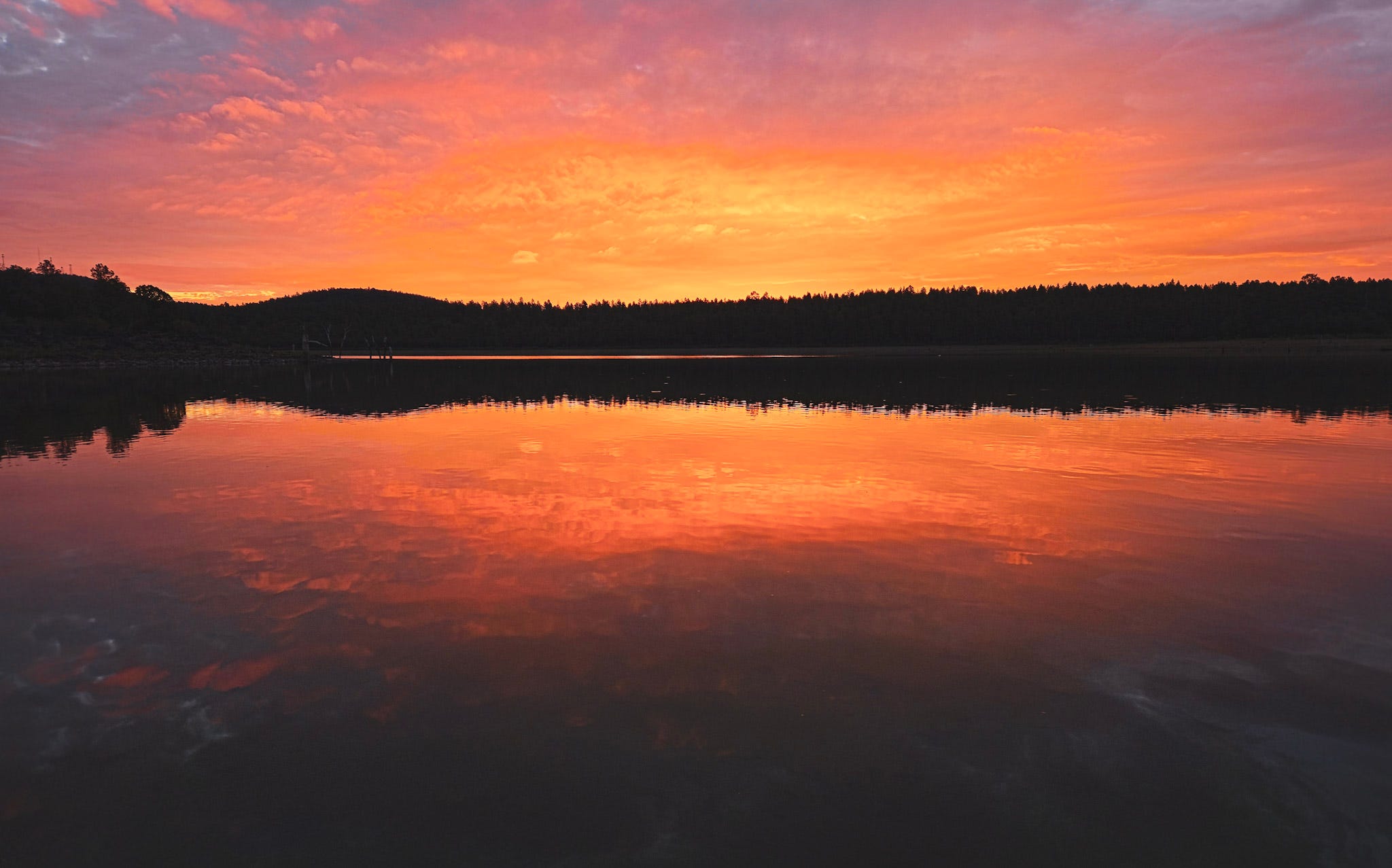
We cultivate that kind of hope by returning to what is actually here: God, family, love, service, gratitude, creativity, and this ridiculously precious experience of being alive. I can love my wife today. I can call my sons today. I can hug my grandchildren today. I can make something beautiful, help somebody, forgive somebody, and give thanks for another sunrise.
Maybe Professor Jiang is right about some of what’s coming. Maybe he’s wrong about most of it. Neither of us knows.
Perhaps knowing the future was never the assignment.
Perhaps we’re here to learn how to live so completely that we’re no longer terrified of losing life. To understand what life is. To accept death as part of it. To loosen our grip on what we cannot control and place our faith in something greater than ourselves.
That’s when the world can remain uncertain without making us uncertain.
We’re here. We’re alive. We’re capable of loving.
And maybe that’s the deepest source of hope: not believing that nothing bad will happen, but discovering a place within ourselves that no headline, prediction, market crash, war, or fear about tomorrow can take away.
That’s enough for me.
And it’s more than enough for today.