

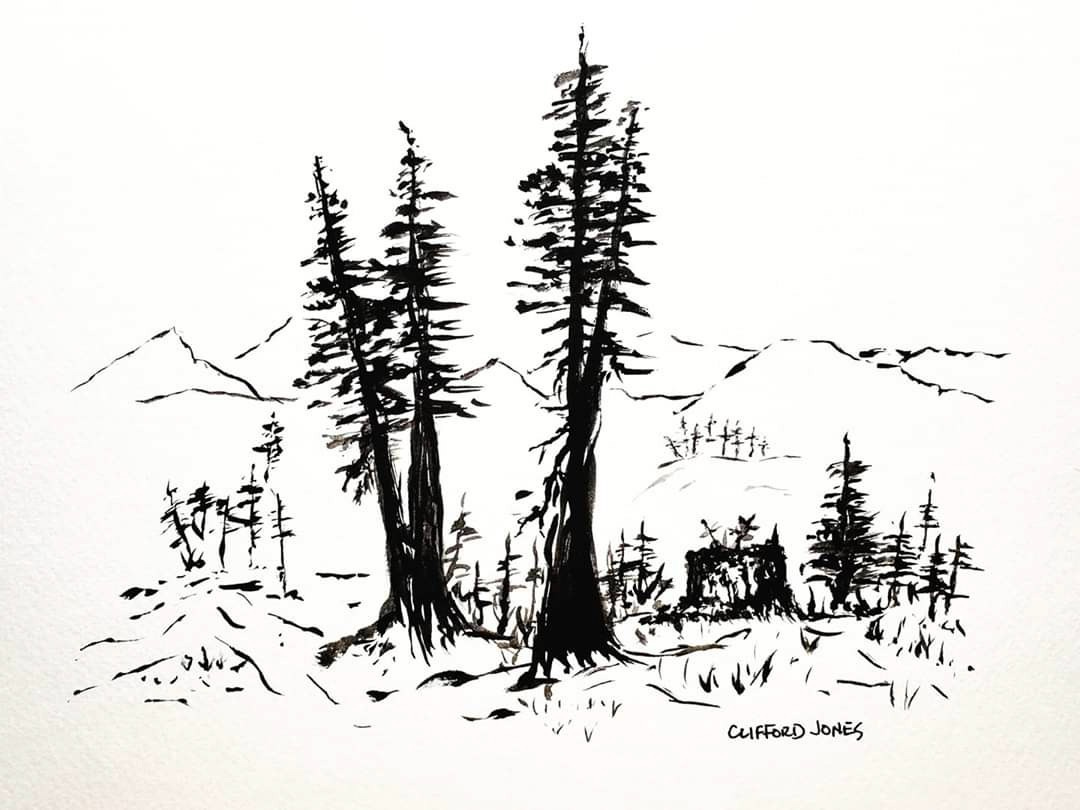
I’m in an interesting stage of life, one I didn’t understand very well when I was younger because I was too busy climbing. As of this month, part of my income comes from Social Security, and the thing I own the most of is time.
The biggest question I face is: Where should I invest it?
For most of my life, I knew exactly what I was supposed to do. Get good grades. Play sports. Compete. Win. Work hard. Build something I could call my own. Provide for my family. Solve problems. Make money. Get better. Get hurt, suck it up. Keep moving.
There was always another goal on the horizon, another reason to believe that reaching it would settle things. It’s as if starving ghosts ran the show, never good enough or satisfied.
Doing came naturally to me through my sports, hobbies, family, and business life. Now that I’m winding down the business and focusing on the art of life, being is proving to be much harder. The same is true of letting go of the many masks I used to wear.
The next quest
David Brooks wrote about this transition in The Second Mountain: The Quest for a Moral Life. His idea: much of the first half of life is spent climbing the mountain of achievement. We build careers, identities, businesses, families, reputations, and a sense of independence. We want to become somebody. We want to matter.
Then life interrupts the climb.
Sometimes it happens through failure, divorce, illness, loss, or retirement. Sometimes success itself creates the problem. You reach the place you once wanted, look around, and quietly wonder, Is this it?
Brooks argues that a second mountain appears, one built less around accomplishment and more around commitment —to family, community, faith, and something larger than ourselves—and that the direction changes. We move from independence toward interdependence, from self-advancement toward contribution, from achievement toward meaning.
I am just beginning to climb that mountain. But lately I’ve begun to wonder whether there is one more.
The last mountain
Not the mountain where we prove ourselves, but the one where we finally stop needing to. Giving becomes the secret to living.
Thomas Merton spent much of his life exploring the difference between who we really are and the identity we construct to survive in the world. He described a false self built around status, achievement, approval, and possessions. That identity can serve us well for decades.
The trouble begins when we mistake it for the whole person.
That idea lands differently later in life. I noticed this decades ago when working as a retirement planner. Clients were headed into clergy, volunteer work, art, community service, and completely different ways of being in the world. My favorite mystics, monks, saints, and many psychologists understand the underlying psychological dynamics. They also embrace the mystery of Spirit, the Collective Unconscious, the Void.
For decades, my work gave me purpose. Ambition gave me energy. Achievement taught me discipline and helped me provide for the people I love. It seems universal. We all face similar existential and spiritual dilemmas later in life: how to be, and how not to fear dying.
The School of Life’s curriculum changes
Carl Jung believed the second half of life demands a different psychological task. Younger people naturally turn outward. We establish ourselves, build careers, raise families, and find our place. Later life calls us inward. The work becomes less about expansion and more about integration.
Jung warned, in essence, that we cannot live the afternoon of life according to the rules of the morning. I am learning that now.
For most of my life, I asked, What’s next?
The better question may be, Who do I want to be while doing whatever comes next?
That is a different mountain. There is no title at the summit. No sales target. No trophy. Nobody applauds because you finally became comfortable with enough. There is no scoreboard for becoming more peaceful, present, or grateful.
And yet this may be some of the hardest work we ever do
The path seems to involve subtraction more than addition. Less proving. Less comparing. Less rushing. Less worrying about how our lives look from the outside. Less confusing productivity with purpose.
And more attention to what is actually here.
The people we love. Our health. A good conversation. A bicycle ride. A photograph worth making. A blank sheet of watercolor paper. A grandchild climbing into our lap. A quiet morning when absolutely nothing important happens.
This does not mean withdrawing from life—quite the opposite. I still want to write, create, mentor, and contribute. I hope I never stop. But I am beginning to understand that these things can become expressions of life rather than measurements of it.
That’s a big deal.
If you are approaching your own final mountain, perhaps the answer is not another reinvention. Maybe it begins with uncomfortable questions. What am I still trying to prove? What am I afraid will happen if I slow down? Which parts of my identity belong to me, and which belong to an old résumé? Where does my life feel most alive now?
And perhaps the hardest question of all: If I stopped measuring my value by what I accomplish, would I still believe my life mattered?
I think that is the work.
We spend the first half of life learning how to become somebody.
The last mountain may be discovering that we were never just what we did in the first place.
Thanks for leaving a comment and restacking this article if it helped you.