

I was the kid who needed the cool kids to need him back. I’m not sure what “cool” meant to me then, somewhere between the kid who could throw a spiral and the one whose family had a ski pass. But I chased it hard.
Football on the playground. Tennis with my dad. Skiing from age six. These weren’t just things I did. They were proof I belonged somewhere. To someone. In some version of the world that mattered to me at the time.
Here’s the painful truth about being young: None of us knows who we are yet. So we borrow identity from the people we’re drawn to. You see something in them you want to see in yourself. A psychologist named John Bowlby spent years studying why this happens. His conclusion was simple and a little heartbreaking.
From the time we’re very small, we need to feel like we’re okay just as we are. (How’d that go for you?) When that feeling is shaky, we spend years looking for it in other people’s eyes. Their approval becomes the mirror we use to check if we’re still there.
For a lot of us, that mirror became a habit we couldn’t put down. When we seek approval in the wrong ways, things can go terribly wrong, such as early substance abuse, self-harm, and other mental health issues.
Carl Jung called the mask we wear for the world the persona. In adolescence, the persona isn’t vanity. It’s survival. The problem is that some of us keep wearing it long after we’ve left the cafeteria. We say and do things we don’t mean to stay liked. To stay safe. I know the consequences of that personally. Dumb things have a long shelf life.
A researcher named Susan Cain wrote a book called Quiet: The Power of Introverts in a World That Can’t Stop Talking. Her finding was straightforward: roughly a third to a half of all people recharge by being alone rather than by being around others. Not because something is wrong with them.
Because that’s how they’re wired.
But we live in a culture that treats stillness like a warning sign. The quiet kid gets asked if something’s wrong. The person who’d rather stay home gets called antisocial. We’ve confused solitude with loneliness for so long that many people are ashamed of needing silence.
Solitude and loneliness are not the same thing. Not even close. It took me decades to figure this out. It was like a slow shift in my consciousness and in the way I saw myself. I noticed I was always okay alone, and as a child, I loved to wander alone through the woods for hours.
When I learned this psychology insight, it immediately helped me realize what I’d been up against my entire life as a competitive athlete, entrepreneur, and later in life, a better writer and visual artist. I was trying to be a hitter in the business world. I never believed I had a choice. It was hustle or die, back to a day job.
I hope you find yourself sooner than I found the real me. It’s brutal wearing the many masks I chose to play the game of life. Now, I get to be the real me. I never really loved that person before.
And even though I’m happily married and blessed with a wonderful and healthy family, I spend most of my time practicing the art of solitude. That rocket burner that used to launch new marketing campaigns, pound more cold calls in a day than most mortals, win the new business, and celebrate at the club is gone.
I let go of needing to belong, and that made all the difference.
My shift in recent years has created much more time later in life to do the things I truly love. Think about what you absolutely love to do, but you put off because you’re “too busy” chasing the dream.
How often do you make time to be alone, and what does that look like? Many of us can’t stand to be alone with ourselves, especially with the many tech devices and digital noise hijacking our attention spans.
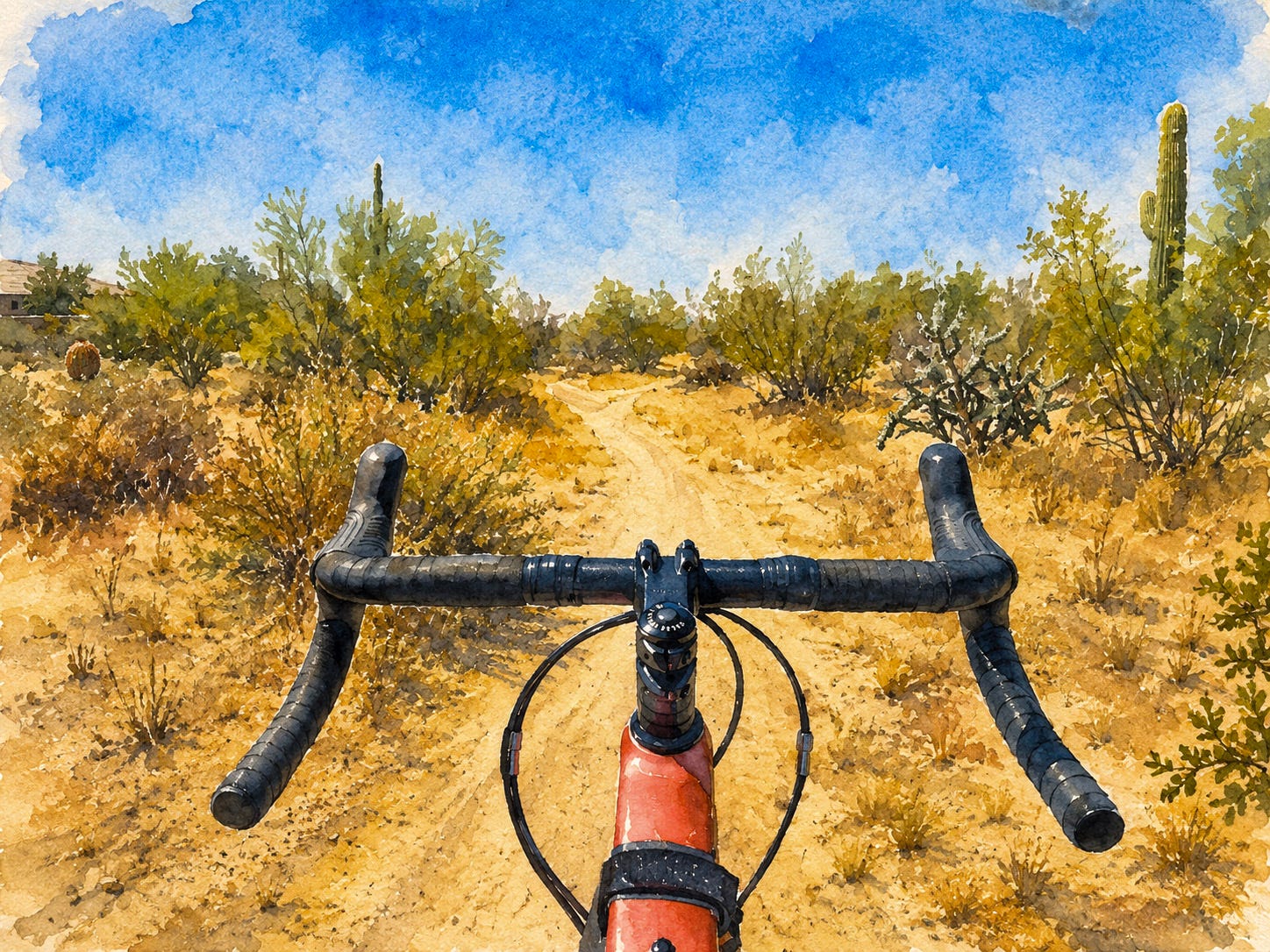
For example, there is a quality of quiet available on a long solo ride that I haven’t found anywhere else. The first 20 minutes are usually lingering static in my mind, whatever is unfinished, whatever is not okay that day.
But somewhere past the first hill, something lets go. The body takes over. Autopilot kicks in. My breathing becomes the focus without focusing. My mind goes still, and I’m moving up to 40 miles per hour.
That stillness can happen at speed with my body fully occupied, or while sitting on a bench in the local park. In that magnificent stillness, something underneath the noise becomes audible.
I didn’t have words for it then. I do now.
Carl Jung said the second half of life is an inward journey. Less about building yourself up in the world’s eyes, more about finding out who you actually are underneath all that effort. The people who move through midlife with the most peace, he observed, are the ones who stopped performing and started listening.
What were they listening for? Themselves. The version underneath. The mystics got there first. And they said it better.
Rumi wrote about the silence between the notes being the music itself. Thomas Merton, a monk who chose to live alone in the Kentucky woods, said that solitude wasn’t about escaping people. It was about finding the ground from which real love of others becomes possible. For many reasons, he’s one of my heroes.
You can’t give from an empty vase. Teresa of Ávila wrote about the soul as an interior castle, many rooms, many distractions, but at the very center, a stillness that nothing outside can touch.
What the mystics understood, and what psychology is slowly catching up to, is the difference between what some traditions call the lower self and the higher self.
The lower self isn’t evil. It’s just scared.
It’s the part of us that needed the cool kids. The part that says and does dumb things to stay visible. The part that confuses being alone with being abandoned. It’s our inner poser showing up to get what the ego wants.
The higher self is quieter. It’s the part of you that can watch the anxiety without becoming it. It’s the same part that remembers to breathe when you forget.
It’s the dreamer that dreams. The watcher that watches. That part of you and me can sit with not-okay and know, somewhere underneath the noise, that okay is still there.
We need to believe so. Believe me, belief matters. There’s an entire science about it called Epigenetics. It’s known as the “biology of belief.” Believe you have experienced solitude, and you can find it again. We had it when we were kids, before school, at the playground, at dance recitals, and at tryouts. All of those experiences were a purposeful journey for your soul—a soul with a seat in the school of life.
Believe and feel your way through the shift. Let go of the negative self-talk. Permit yourself to shift into solitude, never feeling alone. Smile often.
If I could sit down with that kid on the playground and say one thing, it would be this: “The restlessness you’re trying to outrun with other people’s approval will follow you until you stop running or pedaling.”
Not because something is wrong with you or me. Because there's something right between you and me that we haven’t found yet, the true self.
The people who have made real peace with solitude aren’t people who gave up on others. They’re people who found, usually through suffering, loss, age, or some hard stretch of life, that the most important relationship they could build was with their own interior life.
From that place, connection with others becomes a choice instead of a need. You stop showing up as needy, always wanting, with hungry ghosts behind your eyes.
You show up to be present. Content. Accepting.
I still have days when I’m not okay, or when I think I may need to get back into a new consulting gig, or dive deeper into the business of selling my art. But if I am unsure about what I need to do, I’m okay waiting, even though patience wasn’t my virtue.
The lower self doesn’t retire. It just gets less airtime. If it knocks on my front door, I greet it with a smile and ask it to move on.
I know where to go. I sit or lie down in silence. Or, if I feel like riding, I clip in, spin through the early miles, and wait for the shift within. That’s when I always thank my higher power. Sometimes I experience tears of joy for no reason other than just being happy to be here.
Serenity shows us. It always comes. But we have to do the inner work. We must believe. You must believe in your higher self, not the lower self, because the highest power of all loves us dearly, especially when we can’t.
Being alone and being lonely are separated by exactly one thing: whether you’ve learned to be good company for yourself.
It’s a choice. You have to choose to shift.