

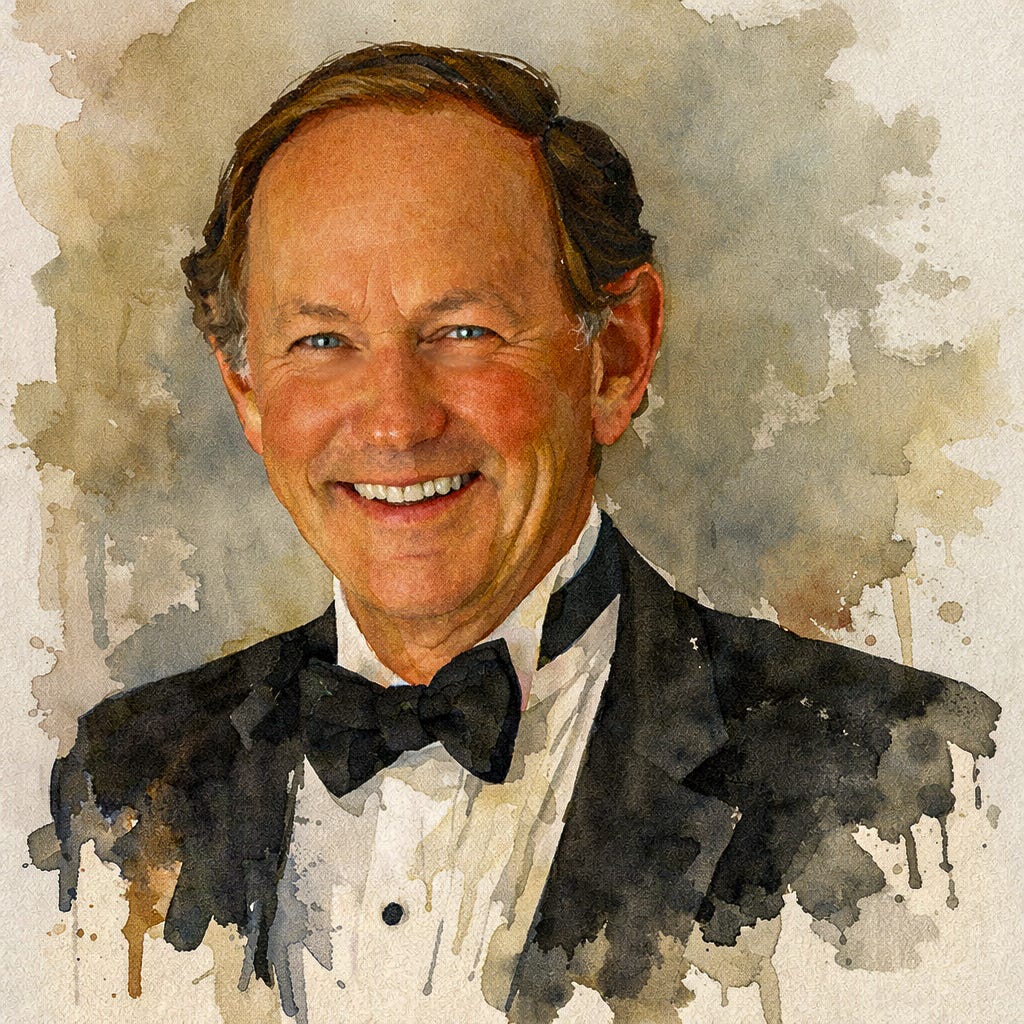
Image credit author, my father, Clifford Jones, Jr.
I was about twelve when my mother found out about my father’s affair. We lived in a small New England town. I wasn’t the only one who knew.
Mother did not whisper her disappointment. She screamed it. She was pissed, wounded, betrayed, and convinced he had sinned.
Dad screwed himself.
Home was never the same. He never had a chance to redeem himself or find forgiveness, let alone from my mother.
That screw-up was my first real lesson in sin — not from a priest, not from scripture, not from some polished sermon about temptation or eternal fire. I learned it in the kitchen, or the living room, or wherever the emotional shrapnel landed that day.
I am the firstborn son of three children, born to parents who confused infatuation with true, lasting love. I say that with compassion now. They did their best. But their marriage failed long before the divorce decree made it official.
For a long time, I thought my father’s sin was the one thing I would never repeat. And I didn’t. I married my college sweetheart at twenty-four. Falling madly in love with my wife was the best thing that ever happened to me.
But that does not mean I was innocent.
My sins were different. Probably more numerous than my dad’s. More scattered. More reckless.
I miss my loving father dearly. He was a far greater man than his sins would lead others to believe.
Sin sucks because of how we feel afterward
It’s like I got addicted to sinning as a kid. Born bad. Damaged goods.
The cycle of fear, self-loathing, shame, and guilt began around the same time I started going to church. I was raised around strong Catholic values, even though I didn’t fully understand the theology beneath them. I needed to know:
Why am I here? Why do we fight? Why are we going to hell if we just got here?
I did my best to play the game everyone else was playing. Work, money, marriage, kids, house. But I kept searching for my fortune in the wrong places.
I was a dumb little shit. It was all about me.
I fell madly in love in college and got married young. Had kids when I was still figuring myself out. Made it pretty big. Then, I lost it all — mental health, business, income, all of our money, and my faith. But not my wife, who stuck by my side when most wives would have run me over with a car.
I got sick of suffering
In my early forties, it occurred to me that everything that sucked in my life had a purpose. I knew I needed to change or die.
I started therapy. I started going to self-help group meetings. I started shifting the way I see myself. Toxic habits fell away. Fear loosened its grip. Anger melted. It’s as if a large cosmic burden of guilt and shame burned away like fog once the sun shines bright enough.
People saw changes in me before I saw them myself. That’s always a good sign.
The meaning of sin in a different light
Around that same time, I was reading books about all the world’s religions, including ancient texts like the Nag Hammadi — a collection of 13 ancient leather-bound papyrus codices containing over 50 Gnostic Christian texts, discovered in Upper Egypt in 1945.
I found a definition for “sin” that changed everything.
In biblical Hebrew, one word translated as "sin" is chata (חָטָא) — meaning to miss, fail, or go astray. According to Strong's Hebrew Lexicon, the root carries the literal sense of missing a mark or target, not simply committing a moral wrong. The Greek equivalent, hamartia, carries the same weight — as noted in this discussion of Romans 3:23: an archer releasing an arrow wide of the target. He's not going to hell. He's going to try again.
In Greek, hamartia carries the same sense — failure, error, missing the mark. According to Wikipedia's entry on Hamartia, the word spans a wide range of failures, from moral fault to innocent mistake. And as explored in Hamartia in Aristotle's Poetics, the notion resists a single clean definition — which is exactly the point. Sin was not only about being bad. It was about being misdirected, out of alignment, unaware of the damage I was causing myself and others.
That does not make sin harmless. Betrayal still hurts. Lies still break trust. Addiction still destroys families. Anger still burns the house down from the inside.
But now I understand: remorse can change how we see ourselves. Our consciousness shifts. We stop seeing ourselves as bad, broken, or doomed. We begin to see ourselves as souls on a journey in a school called life.
Pain can punish us, or it can wake us up
My father’s affair wounded my mother. It wounded our family. It also shaped me — don’t do that to your wife or kids.
In Exodus 20:5, God speaks of visiting the iniquity of the fathers upon the children unto the third and fourth generation. Modern trauma research echoes this. As therapist Terry Real writes, “Family dysfunction rolls down from generation to generation,” unless someone becomes conscious enough to stop passing it on.
But Ezekiel makes the moral responsibility clear: “The child will not share the guilt of the parent, nor will the parent share the guilt of the child.”
I am not guilty of my father’s choices. My children are not guilty of mine. What we refuse to heal, we hand down. That is why self-awareness matters. Why forgiveness matters. Why grace matters.
What freedom looks like
My emotional freedom did not come from theory. It came from wreckage — from looking honestly at my life and asking: What am I not seeing? What am I repeating? What am I ready to change?
Freedom begins when we can say, "This happened. It hurt. It shaped me. But it does not own me.”
The deadly sins of a father or mother do not have to become the destiny of the son or daughter.
Forget the wrongs of the past? Maybe not completely.
But forgive, yes.
Love it all, including the stuff we hate? That may take a lifetime. Or more.
But that, I believe, is the mark worth aiming for — because love is all.
Cliff Jones is an author, artist, and mentor. Discover the power of the Clarity S.H.I.F.T. Method® for improving your career, business, and life at www.CliffordJones.com.