

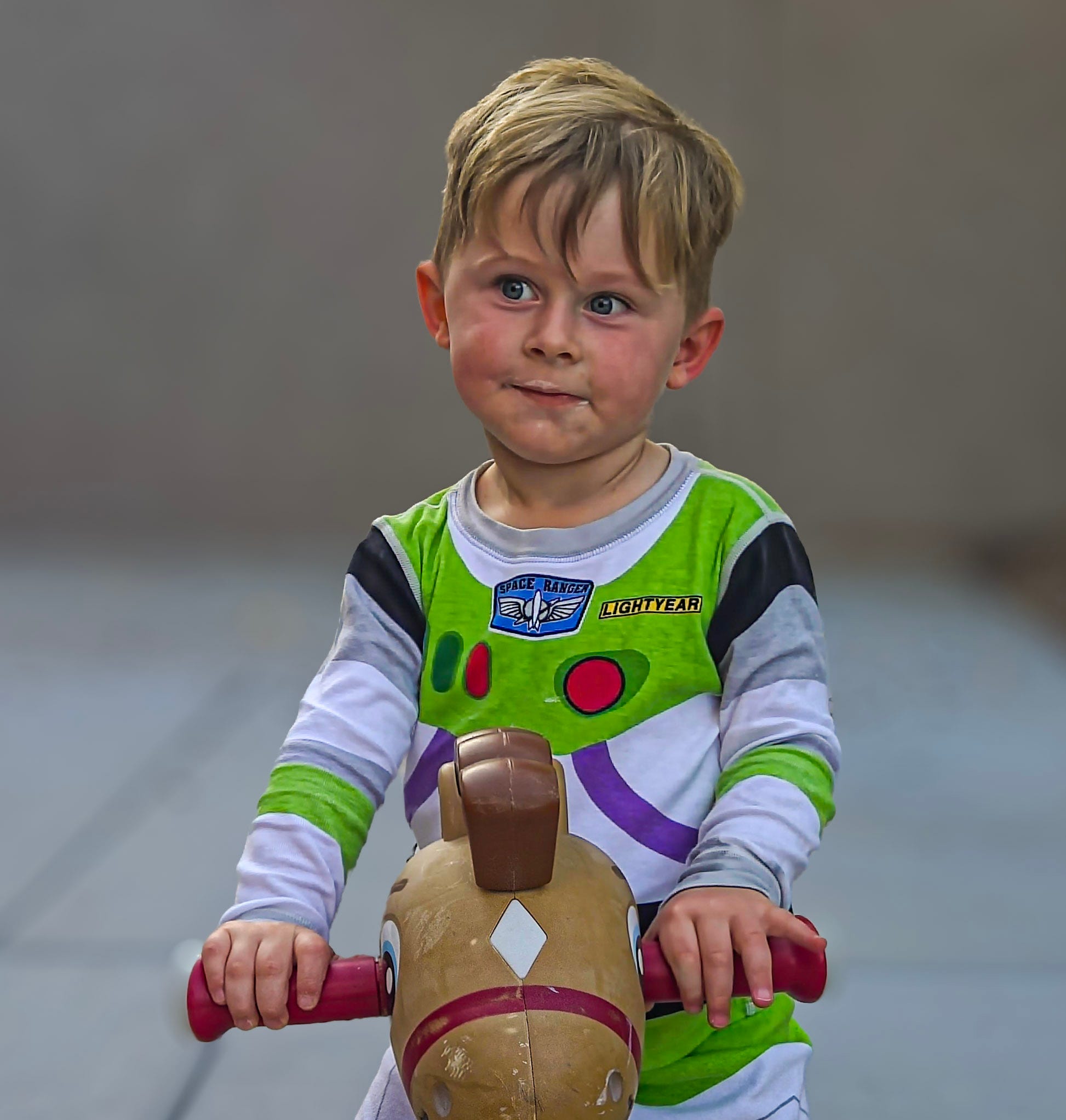
Our oldest grandson, Ford, is almost four. Being with him is pure joy. Lying on the floor while he builds a new LEGO fort or Hot Wheels track, exploring the beauty of the Arizona desert, and watching him ride his bicycle are among the greatest joys I’ve experienced.
I’ve learned that one of the best things I can do for Ford is to let him figure things out for himself. I don’t build his LEGO forts. I encourage him to experiment, make mistakes, and discover what works. If he asks for help, I’m happy to assist. I want him to experience the satisfaction of discovering what he’s capable of doing.
His parents, along with the entire Jones clan here in Arizona, are careful about screen time. We understand the potential harm of too much digital entertainment, especially for young children. One exception is watching movies his parents approve of, including one of his favorites, Moana.
After watching it with Ford several times, I began noticing something fascinating. Beneath the beautiful animation, catchy songs, and occasional ridiculous chicken, I saw a deeper story unfolding. One filled with symbols about human nature, consciousness, fear, and transformation.
Naturally, my curiosity got the better of me.
What is metaphysics, anyway?
Metaphysics is a branch of philosophy that explores the fundamental nature of reality. It asks questions such as: What is consciousness? Why do we exist? Who are we beyond our thoughts, personalities, and physical bodies?
I’ve spent much of my adult life studying thinkers such as Carl Jung, Joseph Campbell, Ralph Waldo Emerson, Lao Tzu, and Plotinus. Although their ideas differ, each offers ways to look beneath the surface of everyday experience.
What fascinates me is how frequently similar themes appear across cultures, religions, and centuries. Perhaps we’re drawn to these questions because we want more than survival, comfort, and material success. We want to understand what our lives mean.
And sometimes, a Disney movie provides a surprisingly good place to begin.
The story beneath the story
Released in 2016, Disney’s Moana tells the story of a young Polynesian girl drawn to the ocean despite her father’s insistence that she remain safely on their island. When darkness threatens her people, Moana ventures beyond the reef to restore the stolen heart of Te Fiti, a goddess whose creative power sustains life.
Along the way, she encounters Maui, a boastful demigod, frightening monsters, dangerous seas, and her own uncertainty. Eventually, she discovers that the terrifying volcanic monster Te Kā is actually Te Fiti, transformed by the loss of her heart.
On the surface, it’s an entertaining adventure about courage and saving the world. The film also draws on Polynesian cultural traditions, each with its own meanings and history. But through my metaphysical lens, I see several universal lessons worth exploring.
The ocean represents the unknown
Throughout the movie, Moana feels an irresistible attraction to the ocean. Her father warns her to stay inside the reef, where life is familiar, predictable, and supposedly safe.
The reef represents the boundaries we build around our lives. Our habits, beliefs, expectations, and fears keep us from exploring what lies beyond them. Carl Jung’s work on the unconscious offers one way to understand the ocean as a symbol of the vast, mysterious territory within ourselves.
Moana must venture into the unknown to discover who she really is. How many adults spend their entire lives inside their imaginary reefs? We stay in jobs we’ve outgrown, cling to inherited beliefs, or avoid difficult conversations because change feels threatening.
Sometimes growth requires sailing beyond what we know.
Maui represents the ego
Maui is powerful, entertaining, insecure, and obsessed with recognition. He wants everyone to know how wonderful he is. Sound familiar?
To me, Maui represents the ego, the part of us attached to status, approval, accomplishments, and the identities we’ve created. Beneath his arrogance, however, is a wounded character who fears rejection. His need for admiration hides his insecurity.
We spend years building impressive identities, hoping success will make us feel worthy. Yet no amount of applause can permanently resolve our inner doubts. Maui begins to change when he discovers that genuine strength comes from helping someone else, not demanding admiration.
There’s a lesson worth remembering.
Te Kā represents our wounded selves
For me, the most profound moment occurs when Moana realizes the terrifying monster Te Kā is actually Te Fiti. The monster isn’t inherently evil. She’s a beautiful, life-giving being who has lost her heart.
Rather than destroying her enemy, Moana sees what’s beneath the anger and restores what’s missing. This reminds me of Jung’s concept of the shadow, the parts of ourselves we reject, deny, or fail to understand.
Anger, resentment, and fear sometimes conceal deeper wounds. This doesn’t excuse harmful behavior, but it may help us understand its origins. Transformation doesn’t always require defeating darkness. Sometimes it requires bringing compassion and awareness to what we’ve been fighting.
Imagine how our relationships might change if we approached people with greater curiosity about their suffering rather than immediately judging their behavior.
Becoming like little children
Here’s where the story becomes especially meaningful to me as a grandfather. Children approach life with a sense of wonder that many adults gradually lose.
Everything is worth exploring, touching, questioning, or taking apart to see how it works. The Zen teacher Shunryu Suzuki expressed a related idea:
“In the beginner’s mind there are many possibilities, but in the expert’s there are few.”
Think about that. As children, we’re naturally curious. We don’t pretend to know everything. As adults, we gradually become convinced that we understand how the world works, often closing ourselves to possibilities that challenge our beliefs.
Spiritual maturity may involve recovering some of that childhood openness without abandoning the wisdom we’ve earned through experience.
What are our children learning?
Stories like Moana offer another fascinating dimension. Young children are still developing their understanding of themselves and the world.
A study published in Child Development found that preschoolers can learn from fictional stories, although they’re more likely to apply lessons when the fictional world resembles reality. That doesn’t mean a four-year-old understands Jungian psychology while watching Maui perform his latest heroic stunt.
But Ford can begin recognizing courage, kindness, persistence, and the importance of helping others. We can reinforce those lessons through conversations about what we’ve watched and, more importantly, through our own behavior.
What Ford is teaching me
At this stage of life, I’m discovering that many of the most meaningful lessons come from ordinary moments. A bicycle ride. A LEGO fort. An afternoon exploring the desert. Or watching a little boy become completely absorbed in an animated adventure.
I don’t need Ford to understand metaphysics. I want him to remain curious, trust himself, learn from mistakes, and discover the joy of becoming who he is.
And perhaps that’s why I practice being this way as best I can. No more sweating the small stuff. Grateful for it all. Approaching each day with fewer assumptions, less attachment to outcomes, and greater openness to whatever life presents. Learning to experience life rather than constantly trying to manage it.
After all these years of studying philosophy, spirituality, and human behavior, I’m beginning to suspect that wisdom isn’t always about accumulating more knowledge. Sometimes it’s about letting go of what we think we know.
Maybe Jesus and Suzuki were pointing toward something remarkably similar: the possibility of approaching life with humility, openness, and wonder.
My job as Ford’s grandfather isn’t to chart every course or protect him from every wave. It’s to love him, encourage him, and help him develop the confidence to navigate his own journey.
Meanwhile, he’s reminding me how to enjoy mine.